

Wondering what angels really look like according to the Bible? Biblically accurate angels are quite different from popular images. This article will explore their true, awe-inspiring forms.
Key Takeaways
- Biblically accurate angels, like Thrones, Cherubim, and Seraphim, possess complex forms and roles that differ significantly from common artistic portrayals.
- The Thrones (Ophanim) are intricate beings associated with divine authority, while Cherubim serve as powerful guardians and Seraphim embody fiery purity and love.
- Fallen angels represent the struggle between good and evil, illustrating the consequences of pride and rebellion in the divine order.
The Mysterious Thrones
Imagine encountering a being so enigmatic that its very appearance defies earthly logic. The Thrones, also known as Ophanim, are exactly that. Described in Ezekiel’s vision, these angels are characterized by their numerous eyes covering their bodies, symbolizing divine omniscience. It’s almost as if they embody the phrase ‘having eyes in the back of your head’—and then some.
The Ophanim are depicted as interlocking four wheels that allow them to move in any direction without needing to turn; in fact, Ezekiel explicitly describes them as moving straight forward without turning, a detail that highlights their otherworldly nature. Their radiant colors further signify their heavenly origin and the power they wield. It’s no wonder that these beings are often considered a distinct class of angels in Jewish tradition.
The Ophanim’s role near God’s throne adds to their fascination. They are not just mere attendants but integral parts of the divine hierarchy. Their presence is associated with the fullness of God’s glory, which is said to fill the earth. Their form and function highlight the intricate and often mysterious ways in which the divine realm operates. The term Ophanim itself, derived from an ancient Hebrew word meaning ‘wheels,’ captures their essence perfectly.
In the grand scheme of the celestial hierarchy, the Thrones hold a unique and powerful position. While some aspects of their appearance and role are not explicitly stated in the biblical text and are interpreted from visions, their presence near the divine throne signifies their importance and the awe they inspire. Whether you view them as watchers or as divine powers, in the midst of the Thrones is a testament to the complexity and grandeur of the heavenly realm.
The True Form of Cherubim

As a kid, you might have pictured cherubs as cute, chubby babies with tiny wings. But the reality of biblical cherubim is far more complex and awe-inspiring. These winged creatures are described as having multiple faces and several wings, challenging the common portrayal of them as merely decorative figures.
Ezekiel’s visions give us a startling glimpse into the true form of cherubim. These angelic beings have:
- Four faces: a human, a lion, an ox, and an eagle, each representing different aspects of creation and divine attributes
- Four wings, as described in Ezekiel, emphasizing their high rank among angelic beings
- Straight legs resembling calves’ feet
- Bodies covered in eyes, adding to their formidable mystique.
Their form is honestly quite weird compared to popular depictions, making them both fascinating and unsettling.
Cherubim are not just ornamental figures; they are guardians of sacred spaces. According to biblical texts, they were tasked with guarding the Garden of Eden, wielding a flaming sword to keep the way to the tree of life. As protectors, these winged creatures also appear above the mercy seat on the Ark of the Covenant, signifying the place where the divine presence resides and offerings were made. Their role underscores their significance in the divine order and their duty to protect the holy cherub.
Learning about cherubim can actually be fun, especially when you compare their true, weird form to what you might have imagined as a kid.
The reality is that cherubim are powerful and multifaceted beings, a far cry from the cherubic figures we often see depicted in art and popular culture. Their true form and function reveal a deeper truth, more complex aspect of divine guardianship and celestial hierarchy.
Seraphim: The Fiery Angels
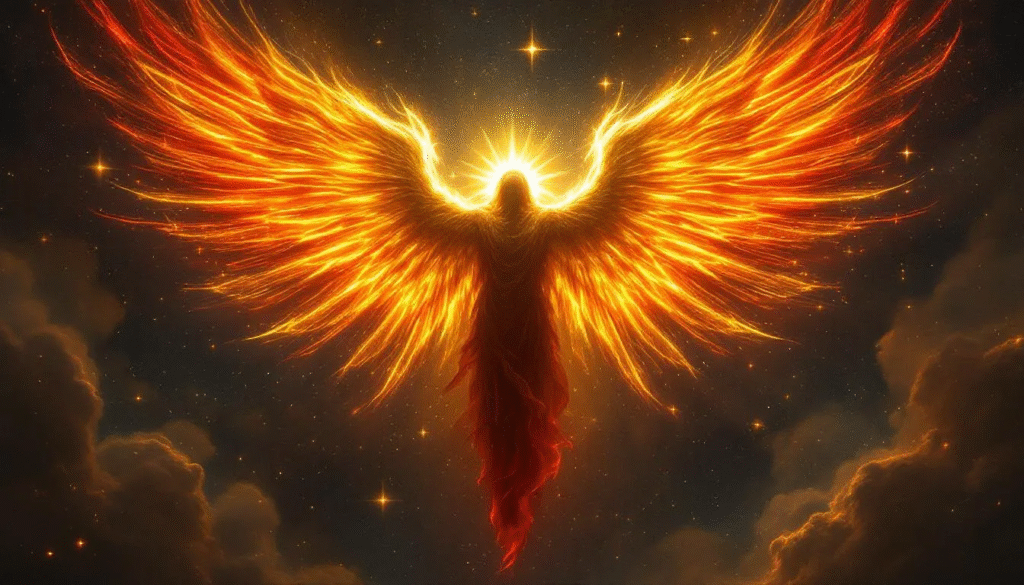
In the year that King Uzziah died, Isaiah experienced a vision that set the stage for one of the most vivid encounters with the divine in scripture. He saw the Lord sitting on His throne, high and exalted, and the train of His robe filled the temple.
Among the celestial beings, the Seraphim stand out for their fiery nature and proximity to God’s throne. These angels are revealed as beings of immense power and purity, their very name linked to the concept of burning. It’s as if their essence is a living flame, embodying both the warmth and the fierce intensity of divine love and spirit.
Seraphim are depicted with six wings, each pair serving a distinct purpose:
- Two wings cover their faces, signifying their deep reverence for God’s holiness.
- Another pair covers their feet, indicating modesty.
- The remaining two are used for flying, symbolizing their readiness for worship and service.
The fiery nature of the Seraphim is not just a metaphor. In biblical texts, these angels are often seen surrounding God’s throne, emphasizing their role in maintaining the purity and sanctity of the divine presence. Their presence is a testament to the overwhelming purity they convey and the awe they inspire in those who behold them.
As they worship, the Seraphim call out to one another, proclaiming that the whole earth is full of God’s glory. In the heavens, the Seraphim’s role is both profound and humbling. They remind us of the intense and all-consuming nature of divine love and purity. Whether you view them as fiery protectors or as beings of worship, the Seraphim offer a glimpse into the awe-inspiring aspects of the heavenly realm.
Living Creatures in Revelation

The Book of Revelation offers a vivid portrayal in detail of four living creatures, each positioned near God’s throne. Far from mere participants in heavenly worship, these beings are central to the unfolding of divine justice and the proclamation of God’s holiness. Their proclamations are echoed in the Gospels’ depictions of heavenly worship, where similar scenes of angelic praise and worship are described.
These living creatures are depicted as having unique appearances, each symbolizing different aspects of creation. Their participation in worship underscores the divinity of Jesus and God the Father, often leading the celestial chorus in declaring ‘Holy, holy, holy is the Lord.’ The text talks about their speech and declarations as central to the heavenly worship. The living creatures are often depicted as talking or making proclamations in the biblical text, explicitly stated as declaring God’s holiness. Their constant reverence highlights the eternal and unchanging nature of divine holiness, making each living creature a vital part of this sacred narrative, just as humans are integral to the story of creation.
But these creatures are not just passive worshipers. They literally play an active role in executing God’s justice, as seen when they watch the horsemen upon the opening of the seals. This act signifies their integral role in the divine plan and their authority in the heavenly hierarchy of beasts, where they find their rest. The heads of these creatures symbolize their power and responsibility in the celestial order. The living creatures talk, declaring God’s holiness and justice, and their talks are central to the unfolding events in Revelation.
The living creatures in Revelation serve as a powerful reminder of the multifaceted nature of divine beings. Their unique appearances and significant roles highlight the complexity and depth of the biblical portrayal of angels. Whether seen as symbols of divine attributes or as active participants in God’s plan, these living creatures add a profound layer to our understanding of the heavenly realm.
Fallen Angels: From Grace to Disgrace

The concept of fallen angels adds a darker, more complex layer to the narrative of celestial beings. These angels, once part of the divine realm, fell from grace due to their rebellion against God. The ancient Canaanite idea of the ‘sons of God’ who attempted to usurp divine authority is closely linked to this concept.
Biblical texts suggest that the sins of fallen angels occurred before human history, with Lucifer, the most prominent among them, leading the rebellion against God. This act of defiance resulted in their expulsion from Heaven and their transformation into symbols of evil and rebellion in the bible.
The story of fallen angels serves as a cautionary tale about pride and the desire for fair power. It parallels the idea of original sin in Christian tradition, emphasizing the consequences of straying from divine order. These fallen beings remind us of the fragile balance between grace and disgrace, and the eternal struggle between good and evil, ultimately seeking their lost glory.
The Role of Angels in Biblical History
Angels play pivotal roles throughout biblical history, often appearing at crucial moments to influence events and guide key figures. The concept and roles of angels have been central to Christianity, shaping beliefs and traditions throughout history. Whether they are delivering messages, protecting the faithful, or executing divine justice, angels are integral to the unfolding of salvation history.
Fallen angels, cast out of Heaven due to their rebellion, are often equated with demons in Christian theology. Their expulsion parallels the concept of original sin, both seen as pivotal in humanity’s fall from grace. This narrative underscores the ongoing battle between good and evil, with angels representing the forces of divine order.
Cherubim, with their complex and awe-inspiring forms, serve as protectors of sacred spaces, while Seraphim, with their fiery nature, embody the purity and intensity of divine love. The living creatures in Revelation highlight the multifaceted roles angels play in worship and justice, emphasizing their importance in the divine hierarchy.
Understanding the roles of these angels and archangels in biblical history provides a deeper appreciation of their significance. It reveals the intricate ways in which divine beings interact with humanity, guiding, protecting, and sometimes challenging us to uphold the divine order.
Artistic Interpretations Through the Ages
Art has long been a medium through which humanity explores and expresses its understanding of the divine. Artistic depictions of angels often differ significantly from traditional representations, emphasizing their formidable and awe-inspiring nature. Symbolism in angelic art incorporates elements like light and specific postures to convey deeper meanings about divinity and protection.
Contemporary artists blend traditional and modern styles, utilizing digital media to explore the complex nature of angels. These interpretations invite spiritual reflection and contemplation about the nature of divine beings. Art that portrays biblically accurate angels often captures their majestic and fearsome qualities, challenging viewers to reconsider their preconceptions.
Whether through literal or abstract forms, these artistic interpretations offer a unique lens through which to view the awe-inspiring aspects of celestial beings. By examining these artistic portrayals, we gain insights into how different cultures and eras have understood and depicted the divine. These works of art not only reflect theological concepts but also inspire viewers to engage with the mysteries of the heavenly realm through words.
Sources and Further Reading
For those intrigued by the mysterious and complex nature of biblically accurate angels, there is a wealth of resources available for further exploration. Ezekiel’s vision of the Thrones, or Ophanim, with their multiple eyes and intricate details, offers a fascinating glimpse into the divine hierarchy.
The Cherubim, with their multi-faced and winged forms guarding sacred spaces like the Garden of Eden, provide another layer of complexity and awe. The Seraphim from Isaiah’s vision, with their six wings and overwhelming purity, add to the rich tapestry of angelic beings.
The four living creatures in Revelation, with their unique appearances and significant roles, along with the narrative of fallen angels, offer profound insights into the darker aspects of celestial beings. These sources and further readings will deepen your understanding and appreciation of the multifaceted nature of angels in biblical texts.
Summary
In exploring the haunting truth behind biblically accurate angels, we’ve journeyed through the mysterious Thrones, the formidable Cherubim, the fiery Seraphim, and the living creatures of Revelation. Each type of angel holds a unique and powerful position in the divine hierarchy, reflecting the complexity and depth of the heavenly realm.
These celestial beings, with their awe-inspiring forms and significant roles, challenge our preconceptions and invite us to engage with the divine in new and profound ways. As we conclude, let us carry with us a deeper appreciation for the mystery and majesty of these heavenly messengers, and the intricate ways they interact with and influence our world.
Frequently Asked Questions
What are the Thrones or Ophanim in the Bible?
The Thrones, or Ophanim, are fascinating angelic beings mentioned in Ezekiel’s vision, known for their many eyes and interlocking wheels, representing God’s all-seeing nature and constant motion. They embody a powerful aspect of divine presence in biblical imagery.
How are cherubim different from the traditional cherubic figures?
Cherubim are quite different from the cute, chubby angels you often see in art; in the Bible, they have multiple faces, several wings, and are covered in eyes, serving as protectors of sacred spaces. So, the next time you think of cherubim, remember they’re more than just adorable figures!
What is the significance of the Seraphim’s six wings?
The six wings of the Seraphim highlight their purpose in worship and service—two for reverence, two for modesty, and two for flight. It’s a beautiful representation of their deep devotion and readiness to serve.
Who are the living creatures in the Book of Revelation?
The living creatures in Revelation are angelic beings near God’s throne, worshiping Him and carrying out His justice while declaring His holiness. They’re essential participants in the heavenly realm!
What is the story of fallen angels?
Fallen angels, led by Lucifer, rebelled against God and were cast out of Heaven, highlighting the dangers of pride and the longing for power. This narrative serves as a powerful reminder of the consequences that come with defiance.
